Sedan pros and cons are important to understand before choosing a car. Sedans are the second most popular type of car body worldwide. They’re a great mix of comfort, style, and practicality. Models such as the Honda Accord, Toyota Camry, and Honda Civic have led the way in ride quality, safety, and fuel efficiency. Sedans continue to attract not only families but also working people due to their balanced performance and luxurious features.
Besides other things, a number of sedans nowadays come with all-wheel drive, adaptive suspension, and high-tech infotainment systems. Therefore, they can compete with SUVs and hatchbacks. Among other things, many sedans nowadays come with all-wheel drive, adaptive suspension, and high-tech infotainment systems. Therefore, they can compete with SUVs and hatchbacks. Knowledge of the pros and cons will equip buyers to make great decisions that suit their driving needs.
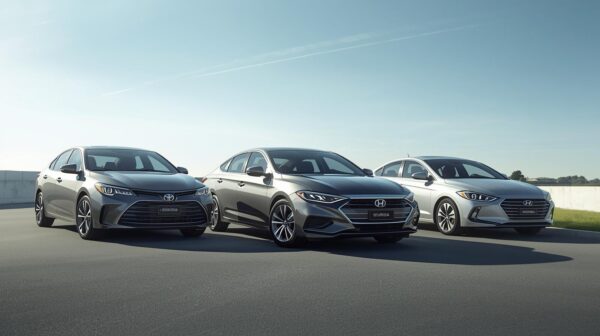
Sedan Pros and Cons: The Advantages
To fully understand the sedan pros and cons, let’s start with the advantages.
1. Comfortable Ride Quality
Sedans are designed to provide a smooth driving experience on highways and city streets. Their combination of suspension and steering geometry results in a well-rounded ride that mitigates the effects of bumps and keeps the driver and passengers from getting tired even during long rides. Besides, many sedans nowadays come with adaptive air suspension, which makes them even more comfortable.
You can probably say the best ride quality comes from luxury sedans like the Mercedes S-Class or Genesis G90, which feature great suspension systems and very quiet cabins. Even basic sedans such as the Toyota Camry are quite comfortable while remaining fairly reasonably priced. In fact, thanks to their lower center of gravity, sedans can take corners with very little body roll, while SUVs, which are taller, tend to have more.
2. Fuel Efficiency
Sedans usually boast lower fuel consumption than SUVs and trucks because they are lighter and have more aerodynamic bodies. A majority of sedans have quite efficient engines, including turbocharged ones, to provide a good blend of power and fuel-saving features. This is why sedans have remained an excellent option for daily drives, long journeys, and earning a living in cities as well.
Besides lower insurance premiums, owners will also save on maintenance costs as the engine systems are smaller and much more straightforward than those on bigger vehicles. Furthermore, eco-friendly and electric sedans in the luxury segment, like the Genesis GV60, combine high efficiency with technological advancements. Therefore, sedans remain a top pick among environmentally responsible drivers who don’t want to sacrifice comfort or performance.
3. Driving Dynamics and Handling
Sedans can provide drivers with a more exciting and dynamic experience. This is especially true when it comes to handling and cornering, compared with taller vehicles. The most common sedans have coil-over strut or torsion suspensions that help in providing accurate road feedback. Moreover, performance-oriented sedans such as the BMW 3 Series can offer fun driving experiences. This is due to their tight steering geometry and tires that slip very little.
Sedans are better in terms of driver satisfaction because they are agile and stable in both city and highway conditions. The availability of four-wheel-drive or all-wheel-drive systems is yet another advantage for handling, as these configurations help gain control, especially in bad weather or during winter. All these handling features and benefits make sedans a very decent ride, even for the enthusiasts, while preserving the day-to-day practicality.
4. Safety Features
Today, most sedans focus heavily on earning good safety ratings and being well-equipped with safety features. After all, it’s been proven that these components reduce the risk of/untimely deaths. Some of these features are multiple airbags, reinforced cabins, and advanced braking systems. Other components that help prevent crashes are stability control, traction control, and adaptive air suspension.
The fact that sedans are usually subjected to rigorous testing by safety agencies makes models like the Honda Accord one of the safest. On top of that, due to their lower profile, they are less prone to rollover accidents, which are common in SUVs. People who are into safety also tend to go for sedans because, apart from protective design, these cars come with advanced electronics. So both families and individuals can have a sense of security while driving/sitting inside a sedan.
5. Trunk Space and Practicality
Sedans can be trusted to provide adequate trunk space and cargo capacity. This definitely puts them above the rest for your daily errands. This will not limit your luggage or groceries. Usually, sedans have rear seats that fold down, so when you have lots to carry, you can easily increase the space for your items. Although sedans are not as flexible as hatchbacks or SUVs, they can still leave compact cars behind in terms of dedicated cargo space.
Besides, your back will thank you for the low trunk height when it comes to loading and unloading, especially if the items are heavy or large. Fancy sedans can go the extra mile by offering features like smart storage compartments or even electronically assisted trunk doors for convenience. To sum up, sedans are really good in terms of both passenger comfort and the usability of everyday items.
6. Affordable Maintenance and Repairs
Sedans usually have lower maintenance costs and less complex mechanical systems than SUVs or sports cars. Parts and labor for sedans are more readily available, and repairs can be carried out quickly and at a lower cost. Moreover, the engines and suspensions in sedans are less advanced, leading to fewer and cheaper repairs over time.
Vehicles like the Honda Civic and Toyota Camry are known for their reliability. This helps reduce the overall cost of ownership. Another plus for sedans is that insurance premiums tend to be quite affordable, as the risks and repair costs are typically lower. If a person is looking for a vehicle that is comfortable, delivers good performance, and is economical in terms of ownership, then a sedan should definitely be on the list.
7. Advanced Infotainment and Technology
Today, sedans are equipped with high-end infotainment systems, touchscreen panels, and multiple connectivity features such as Apple CarPlay and Android Auto. Thanks to these amenities, even the most mundane day-to-day trips or long-distance travel can be transformed into a pleasant experience. Responding to changing customer preferences and the latest trends, luxury sedans also come with digital instrument panels, top-tier audio systems, and built-in navigation.
Beyond entertainment, the technological features in sedans are instrumental in enhancing safety and ease of use, such as voice commands, driver warnings, and assistance systems. If we consider a family or a driver who is fond of gadgets, then they’ll like a sedan driving experience. Besides being enjoyable, it can also provide a host of features that keep the driver and passengers connected and entertained. This exceeds the capabilities of many other car types.
Sedan Pros and Cons: The Disadvantages
1. Limited Off-Road Capability
Sedans are not well-suited to rough terrain or off-road driving. Their low ground clearance and the use of standard suspension components really restrict their capabilities in situations like snow, mud, or even uneven trails. One could say that, unlike SUVs or trucks, sedans have a hard time on dirt roads or hilly terrains.
However, those looking for outdoor adventures will likely need vehicles with special capabilities or all-wheel-drive versions. Another thing to note is that in winter conditions, tire slippage might become an issue if the proper winter tires are not used. In fact, whereas sedans are very good on paved roads, they are not the right choice for off-road enthusiasts. This could limit their use in rural or mountainous areas.
2. Limited Passenger Room
It is true that sedans can comfortably accommodate four adults, but the rear seat can get a bit snug for taller passengers. Moreover, extended road trips may feel long and tiresome. This is especially true in small sedans like the Honda Civic, where space is limited. Both headroom and legroom tend to be smaller than those in SUVs, thereby affecting passenger comfort during long journeys.
Although larger sedans may offer more room, they may come with higher fuel consumption. Usually, families that need greater seating capacity or more flexibility in seating arrangements tend to choose other body styles, since sedans typically seat only 5 people. This is a very crucial factor for buyers who put passenger comfort very high on their list of priorities.
3. Limited Cargo Flexibility
Sedans typically have decent trunk space; however, they are still far behind hatchbacks and SUVs in terms of versatility in cargo carrying. Even if you fold the rear seats, it depends on the size and sometimes the shape of the items whether they will fit in the sedan. If you regularly relocate or love going on adventures, a sedan may feel somewhat limiting.
Also, a taller piece of cargo may not be able to fit inside since the roofline tapers downwards. So, although sedans may be perfectly fine for storing daily stuff, their cargo space might not hold sports gear, furniture, or oversized luggage very efficiently. If someone is leaning towards multi-purpose storage, crossovers might be a better choice.
4. Performance Limitations
Many sedans come with the ability to develop decent top speed and can accelerate well. But as a rule, they do not stand a chance against performance cars on most fronts. Enthusiasts who love nothing more than high-speed or drag racing would be the ones who find sedans to be wanting in terms of engine output or performance tuning.
Even though turbocharged engines can boost performance, sedan designs prioritize comfort rather than extremely high speeds. The way their suspension is set up, and the steering geometry they have, are designed to provide maximum stability rather than aggressive cornering. If the driver’s demand is for raw performance, then a coupe or sports car will likely be preferred over a traditional sedan.
5. Winter Driving Considerations
Sedans, unfortunately, have a hard time driving, especially in harsh winter conditions, such as in snow-covered or icy regions. First of all, even when they are fitted with good all-season tires, the tires may still slip. Secondly, an all-wheel drive system will help a lot. But, in any case, a sedan will perform worse than an SUV or a truck in such conditions.
Moreover, a driver will have to buy and properly use a set of good winter tires. In fact, a sedan without any doubt is the best vehicle to drive in a warm environment. But, if you plan to have one, then you will have to make sure that you have all the equipment and skills necessary to drive it safely in winter, and that is not something every owner would like to do.
6. Lower road presence
Along with cars, SUVs, trucks, and crossovers, sedans stand lower on the road. This may make it hard for the driver to see out, but it also makes the vehicle less apparent to others, which can increase the chance of minor accidents. Sedans also do not seem as powerful in traffic, especially on freeways where large vehicles are present. Their shorter height is a plus from an aerodynamic and handling standpoint. However, there may still be a few drivers who prefer the raised driving position of an SUV for both comfort and perceived safety.
7. Insurance and Depreciation
Although sedans are generally affordable, certain models, such as luxury sedans, may be subject to higher insurance rates. This is due to the costs of repairs or higher engine performance. Besides, depreciation on some models may be faster than on SUVs or crossovers, which is another factor affecting their resale value. Owners should take into account not only the insurance costs but also the loss of value over time. Even though sedans are efficient and comfortable, these financial factors might affect the decision about long-term ownership.
Conclusion
A clear understanding of sedan pros and cons will make your car-buying process much easier. Sedans offer a blend of comfort, performance, and practicality that suits many drivers. They excel in ride quality, fuel efficiency, and technology, making them ideal for commuting and family use. However, they have limitations in cargo flexibility, winter driving, and off-road capability. By weighing the sedan’s pros and cons, buyers can choose the best model for their lifestyle, whether prioritizing comfort, efficiency, or driving enjoyment.